
More input leads to higher memory usage. In practice, it's nearly impossible to avoid, but theoretically it's possible to create an algorithm that manipulates data without using any new variables. Mathematicians and computer scientists often refer to it as O(1) memory complexity.
- They say it's impossible, but I've done the impossible. Imagine a motorway where more and more cars keep arriving. Eventually there's congestion and a complete stop. With Lexi, the speed stays the same no matter how many cars arrive. I've now done this with RAM that stores temporary data. No matter how many tasks you give the computer, it will never run out of memory. This means the world doesn't need such large data centers. Many companies will face serious problems if they don't implement this. For example, Apple's iPhone will become a dumb device compared to competitors using Lexi, claims Julian Berge.
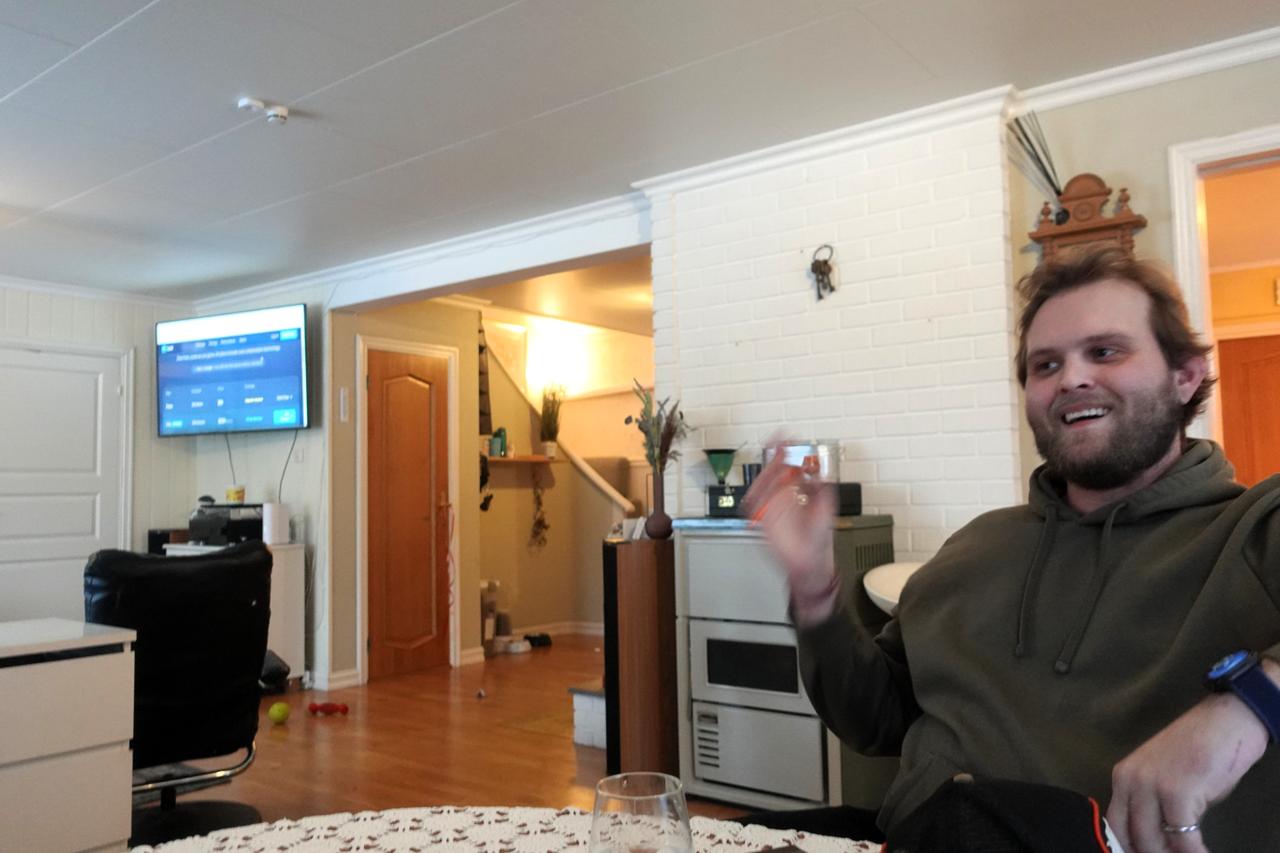
The 29-year-old has potentially solved a problem no one before him has managed.
- When I use AI, I get so tired of the context window exploding. This window depends on how much memory it can handle efficiently. A small context window causes the model to forget earlier parts of the conversation, it starts hallucinating, and the answers from chatbots like ChatGPT, Claude, Gemini and Copilot are absolutely not to be trusted.
To explain it simply: Imagine a teacher with a blackboard. Normally, the blackboard has to get bigger and bigger the more that needs to be written. Eventually you need an entire wall. What the 29-year-old has created is a way to write infinitely on the same blackboard. Not by writing less, but by being smarter about what's there at any given time. The important things are always visible, the rest is stored and can be retrieved instantly.
Should have been on disability
The 29-year-old has both ADHD and ADD and makes no secret of the fact that he has struggled in the job market. His brain likes working with new knowledge, but he has had problems keeping a job for more than three months because he sees patterns and ways of working that are far more efficient.
- But I just got yelled at if I came up with better suggestions. Now I'm on work assessment benefits, but both my doctor, psychologist and the welfare office believe I should be on disability.
Julian has extensive IT knowledge and was going to become a game developer. Then artificial intelligence appeared.
- Then there was no point in developing games, because AI can do that. Now I have deep knowledge of AI and planned to create a LexiNAV that would make it easier to navigate the welfare system, both as a user and an employee.
Lexico AS
- Names:
- Julian (29) and Hans (61) Berge
- Business idea:
- Eternal memory for AI, solving the catastrophic problems AI has with memory, energy consumption and incredibly expensive data centers.
- Ambition:
- A disease-free AI. The company hasn't created a new AI, but the operating system itself. Exit to one of the world's largest companies like Microsoft.
- Financing:
- Equity, seeking 5 million NOK for visibility, legal assistance and a strategic partner.
- Owners:
- Julian (65%) and Hans (35%) Berge.
This has now been launched. Then the EU AI Act Compliance appeared. The requirements for high-risk AI systems take effect on August 2nd this year and require all companies that develop, distribute or use AI in the EU to follow regulations on safety, ethics and transparency. Fines can be up to 35 million euros or seven percent of total revenue. It's estimated that no more than five percent of European businesses are ready for this. Berge says his technology has full EU AI Act Compliance built in.
He has created a way to run forever. No matter how complex the tasks are, it doesn't use more memory.
Hans Berge, CEO LexiCo
- It's about what you use AI for and how you use it. I've already built that in LexiNAV. With the legislation backing me up, I show everything I've done, why, what and how, and it's 100 percent transparent. It was while I was working on this and got so frustrated that the context window kept exploding, that I thought it must be possible to solve it even though it's supposedly nearly impossible.
Reinvented penicillin!
The conversation topics shift quickly, because now dad Hans is also involved. He has extensive IT expertise including eight years at Microsoft and once developed the service Gi Bud, which at its peak was valued at 100 million NOK. The duo has divided the tasks between them. Junior is the developer, senior is the business architect.
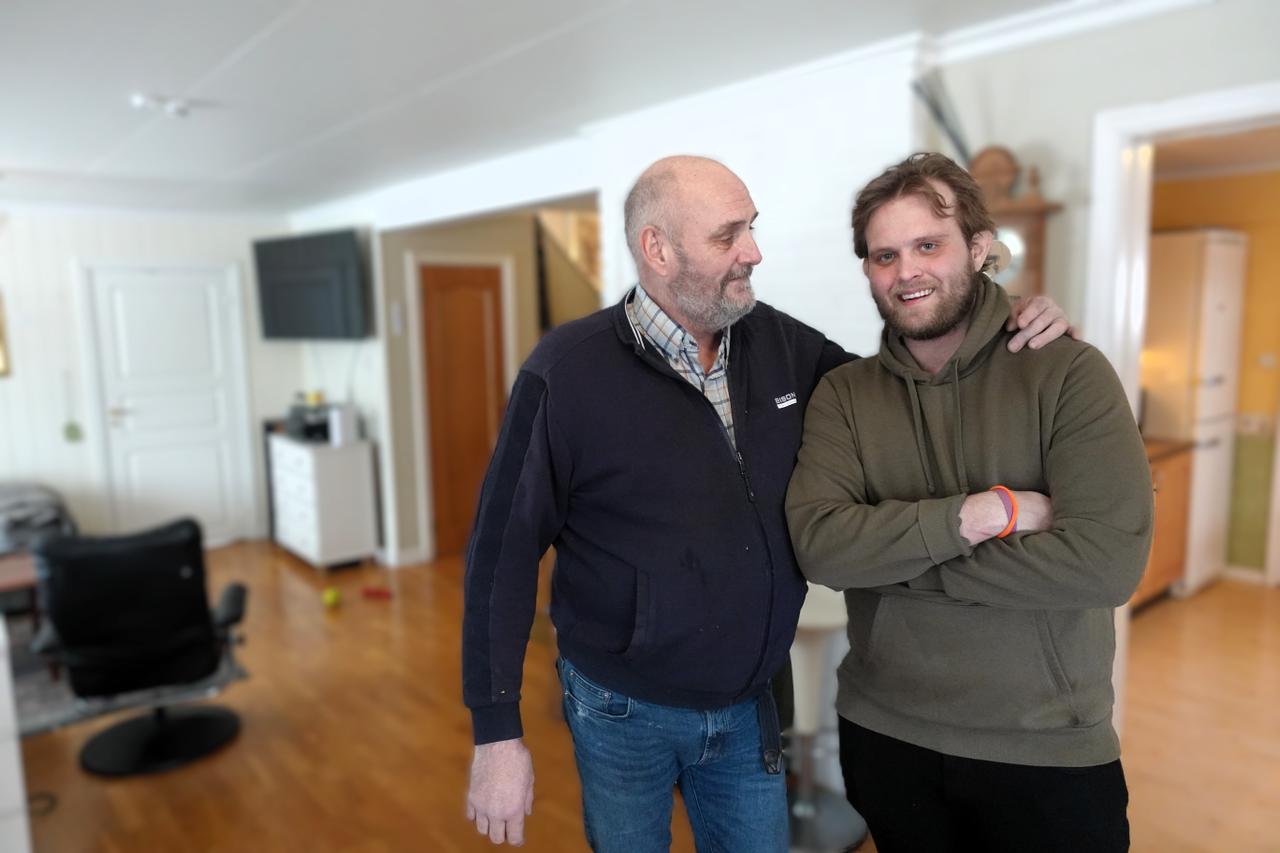
- When you give AI a task, it reads the first sentence every time. With five questions, question one gets read five times. What I've created is a solution that carries the next step forward and deletes the old one. New information in, old gone, but not lost, says Julian.
The answers that chatbots like ChatGPT, Claude, Gemini and Copilot give are absolutely not to be trusted.
Julian Berge, founder LexiCo
- He has created a way to run forever. No matter how complex the tasks are, it doesn't use more memory. Julian has in a way reinvented penicillin, but for AI. This cuts costs by at least 95 percent and the environmental benefit is over 99 percent. Meta is building a nuclear power plant for AI, because memory is expensive and takes up a lot of space. But that's completely unnecessary now. We have close collaboration with researchers at Simula and NTNU on a so-called overleaf document they're working on. At the same time, we've decided to launch the SaaS platform now. All you need is an API key and five minutes. Anyone can test and verify for themselves. I dare not think about how many fantasy-illions this could be worth, says Hans, adding that full academic verification - peer review, reproduction and publication - takes 12-18 months. That's how academia works.

- The world record for tasks per second is 175. I can run over 16,000 tasks per second on a 12-year-old PC because I use O(1) memory complexity, explains Julian.
- Who are the customers?
- Everyone who uses processes, like Microsoft for example. This solution opens many doors. Those who don't implement this will actually be outcompeted, claims senior.
- What does it cost?
- This is the optimal solution: We're not going to sell the main code, the rest will be licensed out. The plan is to sell a master license at auction, and the winner can sell sublicenses. Lexico will have between 5 and 10 percent royalties on all revenue for 99 years. And already today we have opportunities to sell a Plug&Play subscription solution from 29 to 99 dollars per month depending on the number of users. And every day, 800 million people use artificial intelligence, says senior, adding:
- We're looking for a strategic partner. Not one who just has capital, but who has the right contacts and wants to be part of the journey. With 5 million NOK, we'll go far.
To get there, the whole family is involved. Gry is Julian's mother and the father's former partner. She actively participates and keeps them grounded.
- Even my new husband Geir has invested capital for the establishment of the company. In addition, Hans has used his savings, says mom.
Celebrating too early
Silvija Seres has read the description of Lexico's technology. She has a PhD in mathematics from Oxford, an MBA from Insead and has been a member of the academy at Oxford. She was an early part of the Silicon Valley scene. For over 30 years she has worked with artificial intelligence, been director of business development at Fast Search & Transfer and been named Norway's most influential woman in IT.
She does not dismiss that there may be something useful or innovative here. She also acknowledges that it could be a practical breakthrough - even if it's not a theoretical miracle.
She also opens for the possibility that smarter prioritization, compression, caching and incremental updates can provide significant performance improvements in practice and feel like a real breakthrough for the user. At the same time, it's not all positive. In particular, she believes that what Lexico claims to have solved is in practice in conflict with fundamental computer science as we understand it today.
Information cannot be used later without being stored somewhere. Resources don't disappear - they move.
Silvija Seres
- The claims are of the type that normally require published, reproducible documentation and clear delineation of what has actually been solved - and what has not, says Silvija Seres.